
%2018.jpg)
Two exhibitions focusing on the work of Australian women artists were on view in New South Wales across summer 2025–2026: The Hidden Line: Art of the Boyd Women and Dangerously Modern.[1] The latter, organised by the Art Gallery of South Australia and the Art Gallery of New South Wales was widely celebrated for returning a large cohort of major historic women artists to the public eye, even though a substantial proportion of these women have been the subject of extended written narratives, including theses, exhibition catalogues, commercially published books and at least one theatre piece across the last 50 years since International Women's Year was initiated in 1975. By contrast, The Hidden Line organised on a smaller genial intimate scale at the regional but well-resourced Bundanon Art Museum, packed a greater punch by offering a more unexpected and probing speculation around the often fraught and belittled place of women artists in Australian public art historical metanarratives.
Furthermore, The Hidden Line introduced some genuinely underrated and overlooked artists, especially Yvonne Boyd and Mary Nolan who are relatively unknown to the public. Their 1940s figurative oils were fresh and unfamiliar, yet unmistakably reflected themes, stylisations and painterly techniques that were au courant in the Heide circle. Not only the formal innovations introduced by the Heide circle, but also the sharp social and psychological observation that became a hallmark of radical 1940s painting were effectively understood and deployed by Yvonne Boyd and Mary Nolan in works such as Melbourne Tram (1944), In Kensington (1944) and Chinese Restaurant, Chinatown, Melbourne (1942). Compared to the works of their better-known male colleagues, these more than held their own and their presentation in a public gallery was a genuine and welcome surprise, transformative in its implications. By focusing on sidelined female practitioners, The Hidden Line challenged preconceptions of how a key tranche of settler Australian art is understood and interpreted and presented a compelling rethinking of the familiar and known.
%2006.jpg)
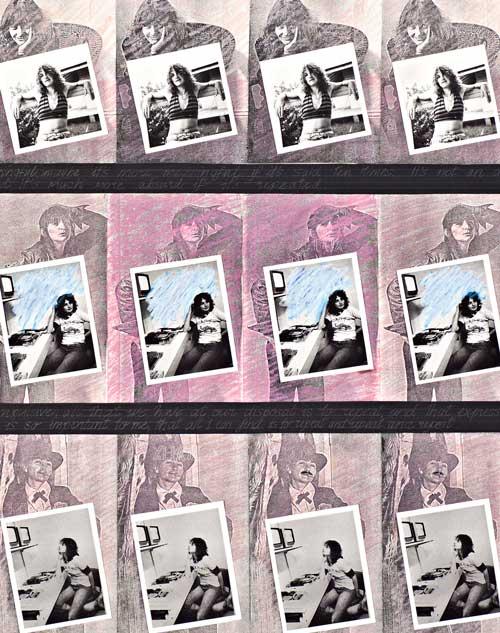
The postwar period is often claimed as the moment white Australian culture gained a new independent maturity and confidence. Yet this so-called “breakthrough” was driven by the fetishisation of white, male, cultural heroes, who became central to mid-century settler Australia's (often inward looking and self-congratulatory) cultural mythos. The vibe of both the Angry Penguins and Antipodean movements was substantially masculinist, even though Sunday Reed formed an essential nexus of patronage and critical debate and Joy Hester has been thoroughly reintegrated into the narratives of her not-always-supportive male peers. Yvonne Boyd drew a striking portrait of Hester, included in The Hidden Line, characteristically seated on the floor, where she worked simultaneously on multiple drawings and gouaches. The intensely charismatic quality of Hester's paintings and poetry, as well as her bold, dynamic personality and her constant but casual beauty, is effectively captured by Yvonne Boyd's free, swirling pencil lines. The teaching of Australian art history in the university and the energies of gallery curators in the 1950s and (at a time when the public gallery sector was rapidly expanding) pivoted on white males. Three of the most high-profiled of these icons, Arthur Boyd, Sidney Nolan and John Perceval, were closely linked to many of the artists in the show as variously fathers, brothers, partners, even occasional and perhaps de facto unofficial guides and teachers. Equally, and in contrast to the assumption that the pace was set by the males in the family, Doris Boyd encouraged and advised her son Arthur in his emerging years as an artist prodigy. Rarely has any public narrative integrated these significant relationships into discussion of the lives and works of the celebrated male artists.
Certainly, some women in the wider family circle subsumed their own careers into those of their male partners. Although via their management and support, they exerted a level of cultural resonance at this landmark era for settler Australian culture, and through Nolan and Arthur Boyd into the mid-century elite culture of the global Anglosphere. The same could be said for Cynthia Reed Nolan, a gallerist and writer closely linked into the Boyd network by friendship and marriage to Nolan. Clearly, not all the women artists in the family were doormats or helpmeets. As married couples, Doris and Merrick Boyd and Hermia and David Boyd both developed a more intertwined and equal creative practice and jointly developed esteemed works of craft and design. This reciprocity stands out against the sexist defaults of the Australian art industry — for example Hermia Boyd’s contemporaries recognised her contribution to the highly popular ceramic work of the 1950s and 1960s.

Whilst creating a subtly celebratory frame for the work of five generations of women artists, The Hidden Line refreshingly moved beyond the self-indulgent mythos of a closed, self-sustaining family genius, created by commentators such as Peter Herbst and Patricia Dobrez; the Boyds have never faced such sharp analytical scrutiny as was directed at the Lindsays by Joanna Mendelssohn, nor have they been outed as tricksters as Nolan was by Nancy Underhill. Although it is fair to extrapolate that, as with the Lindsays and Nolan, the family legend was carefully curated and stoked by its members. The Boyd legend (and that of Patrick White, the Reeds, Bernard Smith and Sidney Nolan among others) was also a way to negotiate mid-century fears about Victorian art and what is now understood—thanks to postcolonialism—as anxieties about cultural making and meaning on unstable relationships to place.
Appreciating the art of these women need not involve the gushing hagiographies of those old texts by Herbst and Dobrez. The Hidden Line also confirmed the public and professional aspects of the Boyd women's art. Emma Minnie Boyd was thoroughly integrated into the life and activities of her non-familial contemporaries and was the equal to other great woman artists who emerged in 1880s Melbourne: Jane Sutherland, Clara Southern and Jane Price. These four Melbourne landscapists taken together have a global importance as social mores in Australia permitted women greater freedom to traverse the landscape and paint, whereas French female impressionists had to negotiate a more ordered set of social constraints and proscriptive templates of female creativity, thus they often concentrated on an enclosed and protected, if elegant, world of upper-class women. Emma Minnie bequeathed both a commitment to art making and an early maturing talent to her descendants, enjoying the most sustained career of all the Boyd women, exhibiting from the 1870s to the early 1930s. Her works show no drop-off in quality as the years passed. Likewise, Doris Boyd is given far greater examination, and her subtle landscape decorations on pots or as paintings, demonstrate strong links with Edwardian romantic watercolour landscape traditions, again representing a female perspective on an often-masculinist tradition.

Even though the younger Boyds’ and Percevals’ works were often laughed at by punters from the floor in the raucous music-hall ambience of Melbourne art auctions in decades past, in The Hidden Line they were granted a sympathetic integrity where styles, subjects and techniques were passed between generations, cousins, siblings. If Emma Minnie set the tone for the family's commitment to art, Arthur Boyd’s style went through to his parents, to his children and cousins as a lodestar. The cross-generation refractions of ideas and preconceptions read pleasantly rather than as nepotistic project. And there are some surprises: Amanda Boyd’s landscape work especially when she eschewed expressionism for a starker formalist layout of the landscape is subtle and lovely, and Florence Boyd Williams’ theatre design and illustration had a global impact and much intrinsic charm.
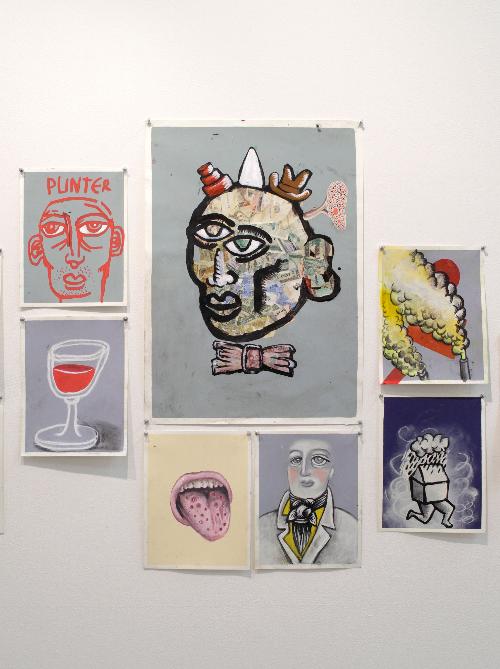
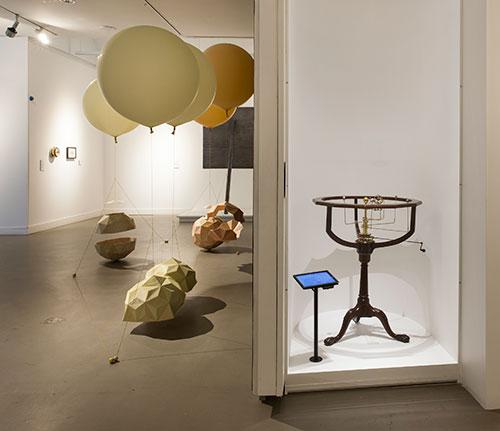
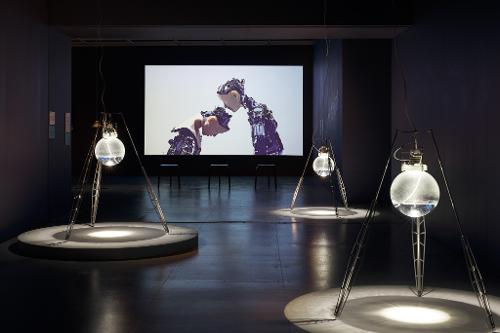
The Hidden Line moves out of a purely Boydian perspective by including contemporary artists, both emerging and established. This further underpins the seriousness of the exhibition’s engagement with the wider question of where women stand in the transactional structures of the arts industry and within the elusive issues of celebrity and meaning ascribed to the arts. This combination of past and present practices, Indigenous and intergenerational knowledges, and analysis of art beyond the comfortable boundaries of the well-known lends The Hidden Line a modesty and thoughtfulness that is often missing in formulaic curatorial presentations of Australian art.
%2017.jpg)
Footnotes
- ^ The National Gallery of Australia took a more global approach to marking 50 years of International Women’s Day with the collection display Women Photographers 1853–2018 (11 October 2025 – 1 March 2026).
 2018_watercolour and gouach on tracing paper.jpg)